
Overview of the La Marzocco Home Range
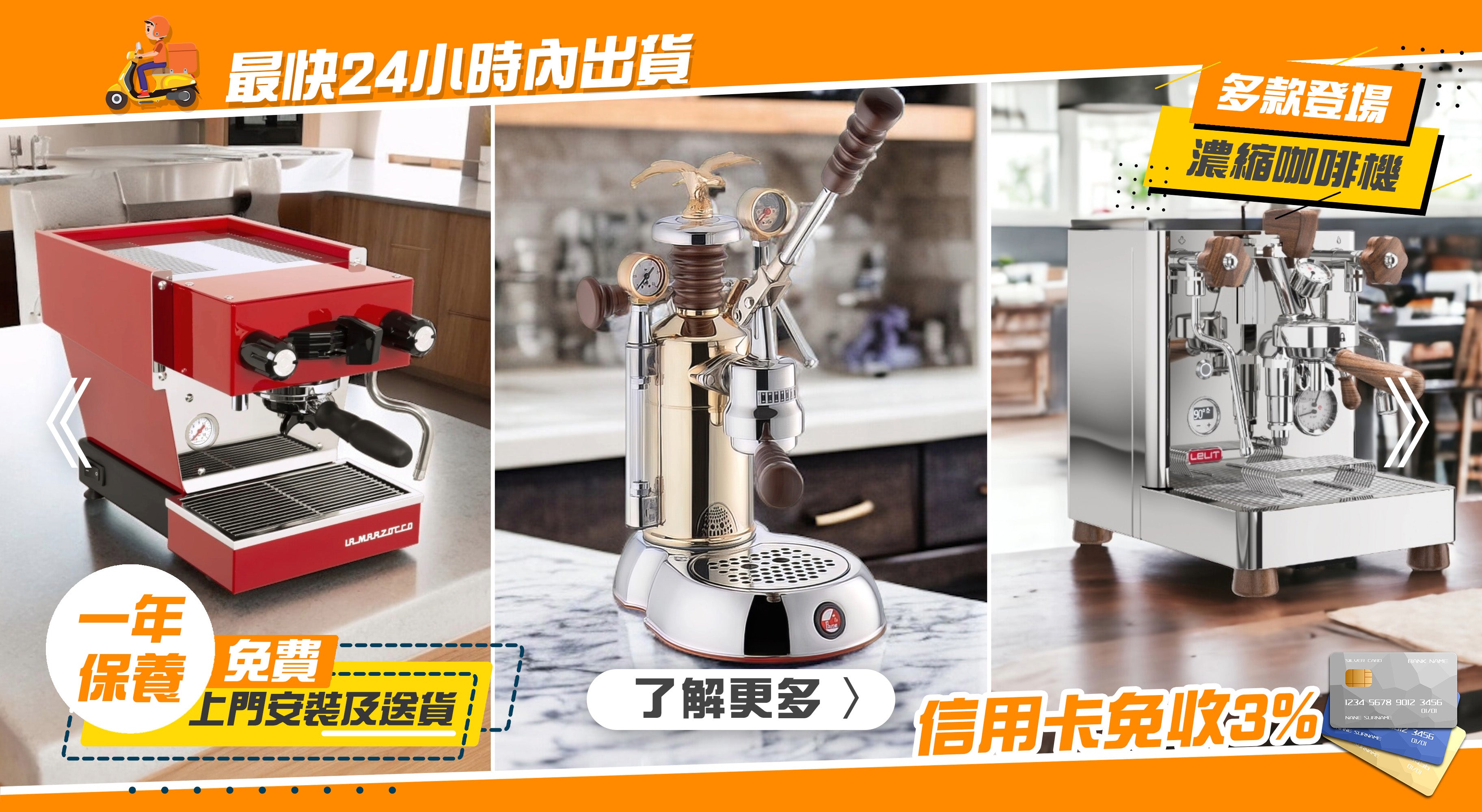
As a leading name in commercial espresso machines, La Marzocco brings café-level build quality into the home through its domestic range. Its principal home models currently include the Linea Micra and Linea Mini(as well as the higher-end GS3). Each carries La Marzocco’s classic industrial design and high standard of construction, with robust materials suited to long-term use. Both models use adual-boilerconfiguration andPID temperature control, paired with a saturated group head to maintain stable extraction temperature and powerful steam performance. This supports a smooth, commercial-style workflow when preparing lattes and cappuccinos at home. Both machines also include abuilt-in rotary pump, which operates quietly, is designed for longevity and delivers more consistent extraction pressure than the vibration pumps used in many domestic machines. Below, we look at the characteristics of each model and the users they may suit.

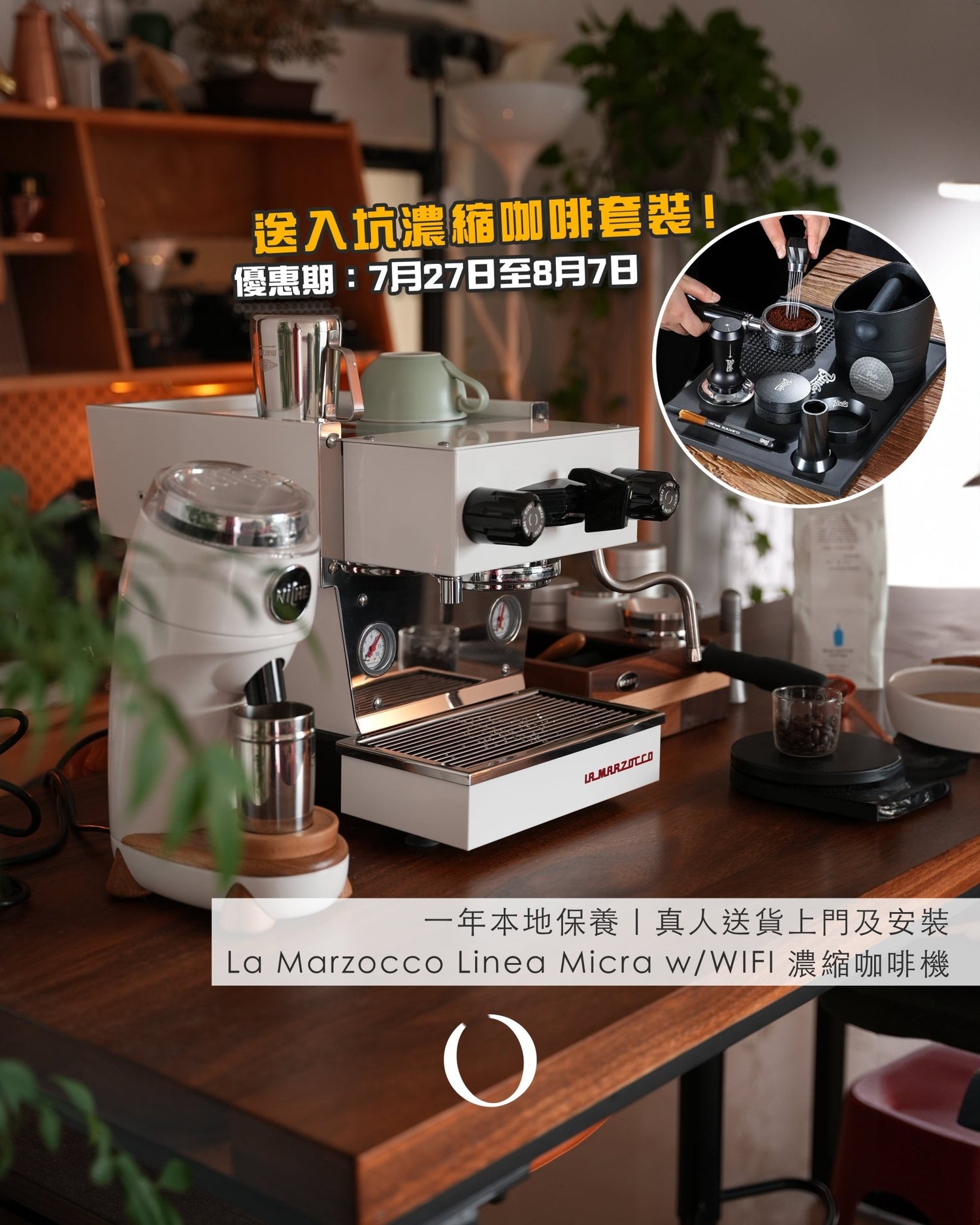
Linea Micra: A Compact, Efficient Dual-Boiler Machine
La Marzocco introduced the Linea Micra in 2022 as a smaller member of its home range. Its compact dimensions and relatively accessible price allow more coffee enthusiasts to enter the La Marzocco ecosystem.Dimensionsare approximately 34 × 29 × 39 cm (height × width × depth), with a weight of 19 kg, so it fits comfortably on a typical kitchen counter. Despite its small size, the Micra uses adual stainless-steel boilersystem (0.25L brew boiler and 1.6L steam boiler) with PID temperature control, offering stability comparable to commercial equipment. In practical use, heating from cold to extraction-ready takes about 5 minutes , improving convenience in daily use. By comparison, traditional E61 machines often need 20–30 minutes to warm up, while the Linea Mini in a 110V environment may need approximately 15–20 minutes to reach brewing temperature and close to 30 minutes to become fully ready for steaming. The Micra therefore has a clear advantage in start-up speed.
The Linea Micra retains La Marzocco’s classic manual brew paddle, although the paddle functions electronically. Turning it left or right starts and stops extraction in a simple, intuitive way. It does not provide direct manual pressure or flow adjustment like some machines, but it does include electronic pre-infusion. At the start of extraction, the pump first wets the coffee puck at lower pressure before rising to 9 bar, supporting more even and consistent extraction. The Micra also offers Wi-Fi connectivity and app support. Through the La Marzocco Home app, users can adjust temperature, schedule power on and off, and initiate functions such as automatic cleaning, making it well suited to households that value convenience.Water-tank capacityis 2 litres. The independent internal tank is easy to fill and clean, although the Micra does not currently support a direct water connection. Overall, the Linea Micra provides performance close to the Linea Mini at a somewhat lower price. The suggested US price is approximately $3,900, nearly $2,000 below the Mini, while official Hong Kong pricing is approximately HK$26–30k. It is particularly suited tousers who value convenience and have limited space, including experienced enthusiasts and ambitious beginners who still want professional-level quality.

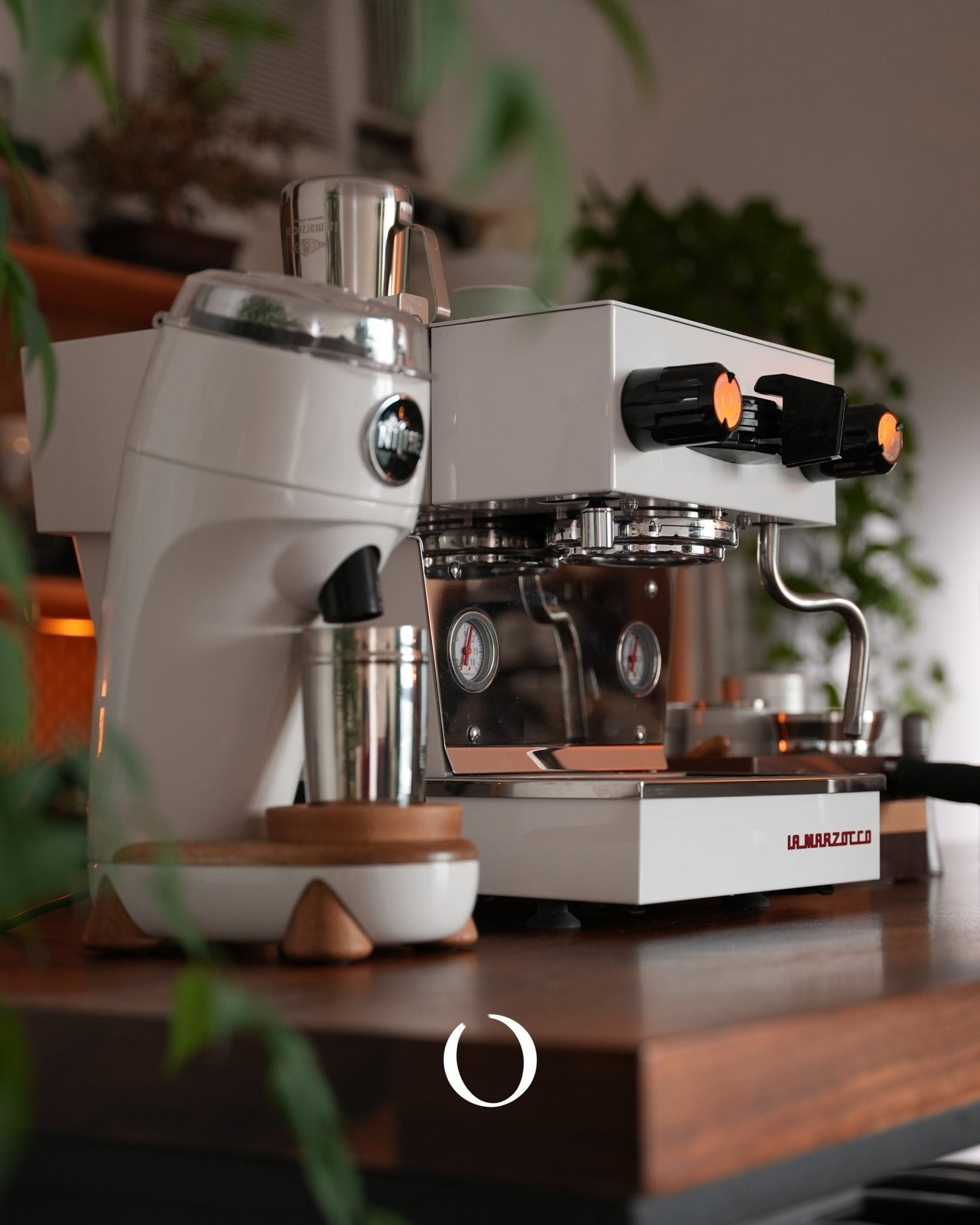
The Linea Micra combines La Marzocco’s classic stainless-steel body and saturated group-head design. Although compact, it has a commercial-style internal structure and consistent extraction performance.
Linea Mini: A Home Flagship with Commercial Heritage
The Linea Mini established La Marzocco’s home range. Derived from the brand’s well-known commercial Linea Classic, it places a dual-boiler saturated brewing system into a single-group domestic machine.Dimensionsare approximately 38 × 36 × 53 cm (height × width × depth), with a weight close to 30 kg, making it larger and more substantial than the Micra. The Linea Mini is known forstrong stabilityanddurability: it is equipped with 3L large steam boiler and 0.17L stainless-steel brew boiler (the 220V version has a heating output of 1820W), together with commercial-grade core components and arotary pump. This enables extended operation while maintaining consistent temperature and pressure. Some specialty cafés, coffee carts and small restaurants have used the Linea Mini commercially, reflecting its reputation for reliability.

The Linea Mini follows La Marzocco’s tradition of straightforward operation. Its front panel has the classicmanual brew paddle, operated in the same way as the Micra. In the Linea Mini Rrevision introduced in 2023, La Marzocco addedtwo-stage electronic pre-infusionanda digital display and shot timer, along with an optionalBrew-by-Weight extraction system. The updated Linea Mini can use built-in sensing to automate parts of extraction, timing and weight monitoring, moving the workflow closer to a one-touch experience. It also adds practical details such as an internal pump-pressure adjustment and automatic rinsing. However, the Linea Mini does not provide manual extraction-pressure or flow control. Fine adjustment of the extraction curve therefore requires modification or indirect changes such as dose and grind size, offering less flexibility than machines with built-in variable flow. We examine this point further in the comparison below. The Mini includes a 2-litre water tank and can be plumbed directly into a water supply for a fixed installation. Its steam poweris substantial and supports repeated milk steaming, making it attractive to people who frequently prepare milk-based coffee.


That level of performance comes with a high price. Official Hong Kong pricing for the Linea Mini is approximately HK$34,000–40,000(with US pricing around $5,500–6,000 USD), more than twice the cost of many dual-boiler home machines. It is therefore better suited toenthusiasts with exacting standards for coffee quality, or users building a small commercial coffee setup. If you value consistent results from the moment the machine is ready, appreciate classic industrial styling and accept the premium attached to the brand and its long-term value, the Linea Mini remains an aspirational option.

(Note: the La MarzoccoGS3 is the brand’s higher-tier single-group model, offered with a larger boiler and an advanced pressure-control version (MP). Pricing is approximately HK$50k and above, positioning it for professional enthusiasts or commercial use. This article focuses on the more widely considered Linea Mini and Micra.)
Lelit Bianca V3: A High-Value Choice for Enthusiasts
After looking at La Marzocco’s best-known home machines, we turn to another model widely regarded among enthusiasts:the Lelit Bianca V3. This Italian dual-boiler semi-automatic espresso machine delivers highly adjustable professional features ata considerably more accessible price, leading many enthusiasts to regard it as a strong value proposition. Current Hong Kong pricing for the Bianca V3 is approximately HK$16,000–20,000 , depending on version and colour. This is about half the price of the Linea Mini, yet its principal specifications remain substantial: dual boilers (steam boiler 1.5L and brew boiler 0.8L), PID temperature control, a rotary pump and a commercial-grade E61 group head. The V3 version also upgrades to aquiet rotary pumpand introduces several technical refinements over the preceding version.

The Bianca’s most prominent feature is themanual flow-control paddle. Rotating the wooden paddle allows users to adjust water flow and pressure during extraction, enabling pressure profiling. With practice, different extraction curves can be produced—for example, low-pressure pre-infusion, full pressure through the middle of the shot, and reduced pressure near the end—to balance flavour and create greater complexity. This is a capability not offered by the Linea Micra or Mini . Those machines favour a traditional fixed 9bar extraction style, while the Bianca lets experienced users explore a wider range of approaches. Beginners may not use every variation immediately, but the Bianca provides room to grow as their technique develops.

Beyond manual control,the Bianca V3 also offers several hardware and software features. The current version includes theLelit Control Center (LCC) display, used to set PID temperature and parameters such as pre-infusion time. Its newlow-flow brewing modecan automatically create a gentler pre-infusion stage, lowering the learning curve and helping less experienced users achieve more consistent espresso. The V3 also introducesfour power-management modes(always on, efficient standby, economy mode and Stand-by) and anNTC-sensor-optimised heating system, designed to shorten warm-up and reduce energy use during extended standby. Users report that, with a smart plug scheduled in advance, the machine can be ready when they wake. Its large steam boiler provides ample pressure for milk texturing. While it is slightly less forceful than the commercial-style output of the Linea Mini, it can comfortably handle 2–4 milk drinks in routine use. The body is approximately 29 cm wide, 48.5 cm deep and 40 cm high, similar in width to the Linea Micra but somewhat deeper and taller. At approximately 26.5 kg, it remains a machine that requires a permanent position. The Bianca also has approximately 2.5L independent water tank, accessible from the side of the machine, and can also be connected directly to a water supply, offering considerable flexibility.

Taken as a whole, the Lelit Bianca V3 is a machinedesigned for dedicated coffee enthusiasts. It suits users who understand the fundamentals of extraction and enjoy further experimentation. If you want performance approaching a flagship machine from a manufacturer such as La Marzocco at a relatively measured budget, while retaining the pleasure of adjusting parameters, the Bianca V3 is a compelling option. As one overseas comparison suggested: “If you prefer a traditional commercial workflow and dependable output with minimal adjustment, the Linea Mini is easier to live with. But if you want toexplore the limits of extraction at home, the customisation offered by the Lelit Bianca is difficult to match.”

The white Lelit Bianca V3 espresso machine combines elegant wooden accents with a classic squared stainless-steel body. The manual paddle above its E61 group head allows real-time adjustment of extraction pressure to create different flavour profiles.
Core Specification Comparison
Below, we compare the core specifications and positioning of the Linea Micra,Linea Mini and Lelit Bianca V3 to make their differences easier to understand at a glance:
| Model | Boiler & pump | Water supply | Key features | Approximate Hong Kong price | Suitable users |
|---|---|---|---|---|---|
| La Marzocco Linea Micra | Dual boiler, rotary pump | 2L water tank (no direct connection) | Fast 5–10 minute warm-up, app remote control, smallest footprint | HK$26–30k | Experienced enthusiasts and well-funded beginners who value speed and convenience |
| La Marzocco Linea Mini | Dual boiler, rotary pump | 2L water tank plus direct-plumb capability | Durable commercial-style construction, strongest steam performance and excellent stability; (the enhanced Mini R adds pre-infusion and extraction measurement) | HK$34–40k | Experienced enthusiasts and light commercial use where maximum stability matters |
| Lelit Bianca V3 | Dual boiler, rotary pump | 2.5L water tank plus direct-plumb capability | Manual extraction-pressure control through the flow paddle, pre-infusion and energy-saving modes, and multiple finishes with wooden accents | HK$16–20k | Experienced users who enjoy adjusting flavour, and value-conscious buyers |
(Note: prices reflect market conditions around 2024 and may differ from current dealer pricing. Suggested user profiles are for reference only.)
As the table shows, each machine has a different emphasis. The two La Marzocco models lead in construction and consistency: the Micra delivers a compact all-round package for daily home use, while the Mini is close to a scaled-down commercial machine. The Bianca V3 has the lowest price of the three but the widest range of controls, making it attractive to users who enjoy hands-on adjustment. Below are suggestions for different needs.
How Do You Choose the Right Espresso Machine?
Before deciding, consider yourbudget, available space and intended use:
-
If you havea generous budgetand valuea classic brandwithconsistent, straightforward operation, and do not mind a larger machine, theLa Marzocco Linea Minimay be a long-term investment. It can suit home users with exacting quality standards, small commercial environments that serve limited volumes, and collectors who appreciate La Marzocco’s classic aesthetic. Its professional-level capability is unlikely to restrict the development of your technique. The main considerations are warm-up time and electricity use: higher power consumption may encourage owners to leave it on for extended periods to maintain temperature, although the current version includes an energy-saving mode.
-
If you also valueLa Marzocco’squality and reputation but havea tighter budget or limited space, and want a quick morning coffee without a long wait, theLinea Micraoffers a strong balance of performance and practicality. Its smaller body delivers extraction capability close to the Mini, together with a more modern interface and app-based remote control. For busy professionals or households that prepare several coffees consecutively, the Micra responds quickly. It is also particularly suitable forbeginners without extensive experience of commercial machines, as it has a gentle learning curve and requires little complex adjustment to produce consistent espresso.
-
If you have been making coffee for some time and wantmore room to experiment, while remaining price-conscious and keeping the budget within reason, the Lelit Bianca V3 can provide extensive scope for exploration. It suits enthusiasts who enjoy adjusting equipment and examining different flavour outcomes. The Bianca makes it easy to experience variable extraction pressure normally associated with manual lever machines and to compare different pressure profiles. Its price may also leave room in the budget for ahigh-end grinder, which can further improve results; many experienced coffee professionals consider grinder investment at least as important to flavour as the espresso machine itself. The Bianca is somewhat less forgiving for beginners than the other two machines. Its E61 group needs sufficient warm-up, and manual adjustment takes practice. That process of learning, however, is part of the appeal for many enthusiasts.
In summary, beginners should prioritiseconsistency and ease of use, while experienced users may place greater emphasis onfeatures and adjustability.La Marzocco’s home range is defined by consistency, durable construction, retained value and a reassuring ownership experience, while the Lelit Bianca stands out for experimentation, creative control and value. Neither approach is universally better; the key question iswhether it suits your needs. Before ordering, consider trying the controls and brewing performance in person at a physical shop such as Coffee Stage . If the decision remains difficult, begin with the one or two factors that matter most. Choose La Marzocco if brand support and reputation are decisive; choose Lelit if adjustability and price are the priorities. We hope this comparison gives you greater confidence in selecting an espresso machine that fits your own home coffee journey.
Internal links:
View the Lelit Bianca V3 espresso machine for current pricing and specifications. For more buying guidance, browse our Coffee equipment guidesCoffee news and updates or contact the professional team at Coffee Stage directly. We look forward to helping you begin a rewarding home-coffee journey.