

Coffee Stage Sharing Cup S Size Mountain Mist Blue
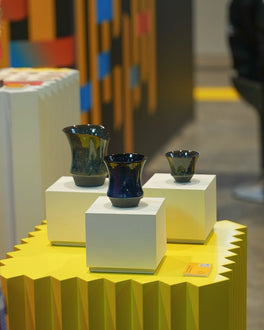
Coffee Stage Sharing Cup series displayed at DesignInspire 2025, with the small S Size ceramic tasting cup on the right
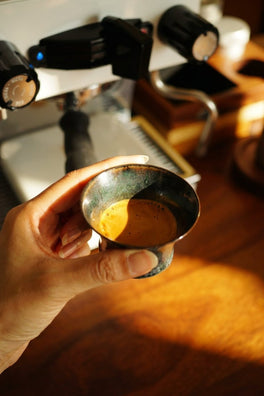
Coffee Stage Sharing Cup S Size held with a small espresso serving, coffee machine in the background
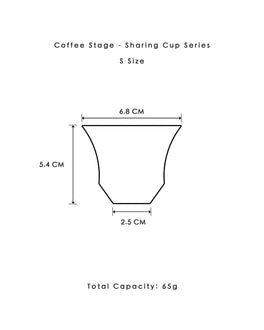
Coffee Stage Sharing Cup S Size dimension diagram: opening outer diameter approximately 6.8cm, height 5.4cm, base diameter 2.5cm and capacity reference 65ml
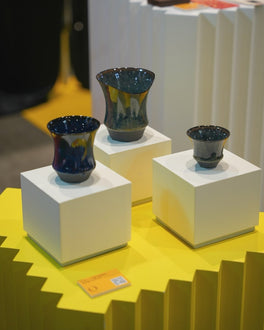
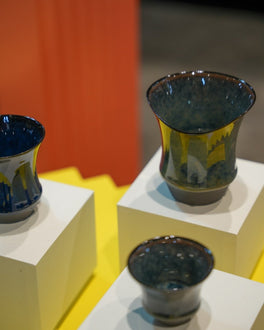
Coffee Stage Sharing Cup three cup forms displayed at the Coffee Stage booth at DesignInspire 2025
Coffee Stage Sharing Cup close-up of rims, glazes and cup bodies at the DesignInspire 2025 display
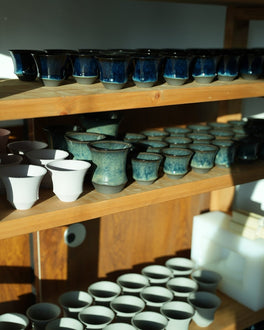
Coffee Stage Sharing Cup glazed finished cups and in-progress cup bodies arranged on a wooden rack in the Hong Kong workshop

Coffee Stage · Designed and made in Hong Kong

Coffee Stage — Sharing Cup

$168.00

S Size Approx. capacity 60–65 ml

Choose a glaze Mountain Mist Blue Four glazes — tap to switch

Estimated dispatch September–October 2026

Free SF Express shipping over HK$500 in Hong Kong and Macau only.

View the full S Size guide

Coffee Stage · Designed and made in Hong Kong

Sharing Cup series

We redesigned how coffee reaches the lips, how aroma comes closer and how one specialty coffee unfolds from hot to cool — through the rim, body curve, opening and internal structure. Five cup forms answer different everyday needs; choose by the drinking experience and brewing style you want.

$168.00 and up

Sharing Cup pieces arranged on a workshop table, with blue-green glaze in different depths

From specialty-coffee temperature rhythm to everyday drinking, pour-over, drip bags and extreme aroma exploration.

  • Designed and made in Hong Kong
  • Japanese black clay
  • Glaze-fired above 1200°C
  • Lead-free glaze
  • Two firings: bisque and glaze
  • Made by hand in our Hong Kong workshop

Part 1 · Five cup forms

Choose by the drinking experience you want

Why we call it Sharing Cup

S Size was the first Sharing Cup. We divided one pot of specialty coffee into small pours, so each sip meets a different stage of temperature and aroma. Drinking less was never the goal; we wanted a clearer tasting rhythm and a natural way to share one brew.

Close-up of the opening and body, showing the flow and depth of the glaze
The flow and depth of the glaze are different for each one.

How the series evolved

  1. Beginning with S Size: tasting coffee through its changing temperature

    Sharing Cup began with dividing one specialty coffee into smaller servings and refilling the cup several times. S Size brings attention back to how coffee changes from hot to cool, giving each sip a clearer rhythm. From there, we began considering how the rim, curve of the body and capacity could reshape the experience of a drink.

    Two small Coffee Stage Sharing Cups held outdoors
    The original small-format Sharing Cup became the starting point for the entire series.
    • S Size

      I want to drink one cup of specialty coffee from hot to cool and experience its different temperature stages.

      60–65ml 6.8×5.4 cm

  2. One starting point, extended into three everyday uses

    After S Size, we explored more directions for the vessel and developed M, L and Alpha. M balances coffee, tea and everyday capacity; L completes pour-over, drip-bag brewing and drinking with less equipment; Alpha uses a recessed rim to shorten the distance between the nose and the aroma inside the cup. The three models extend from the same starting point to answer three different uses.

    Unglazed Coffee Stage Sharing Cup forms with different heights and rim profiles arranged on a workshop board
    Different capacities and rim directions gradually took shape in the workshop from the same starting point.
    • M Size

      I want one cup that balances coffee, tea and an everyday capacity.

      Approx. 170ml 8×8.5 cm

    • L Size

      I want to complete pour-over brewing, drip-bag coffee and drinking with minimal equipment.

      Recommended approx. 300ml; reference range approx. 300–330ml 10.2×10.5 cm

    • Alpha

      I want to bring my nose closer to the aroma inside the cup.

      Approx. 230ml 10.2×10.5 cm

  3. Taking aroma exploration to its most extreme expression yet

    With Beta, we brought together what we had learned about the rim, liquid flow, aroma and internal structure. Its recessed rim and central aroma column continue our exploration of how aroma can approach the nose in a more concentrated way. Beta is Sharing Cup's most extreme aroma exploration to date, while all five models still answer different drinking styles.

    Coffee Stage Sharing Cup Beta Size held outdoors with the central aroma column visible inside
    Beta combines a recessed rim with a central aroma column to take aroma exploration to its most extreme expression yet.
    • Beta

      I want a more concentrated, more extreme expression of aroma.

      Recommended fill: approx. 190ml 10.2×10.5 cm

So we designed five cup forms

The five models answer different needs: the temperature rhythm of specialty coffee, everyday coffee and tea, pour-over and drip bags, closer aroma, and a more concentrated, extreme aroma direction. You do not need every specification first — start by asking how you want the cup to shape this drink.

  1. Sharing Cup S Size in Dusk Mountain on a round wooden tray, with a purple-pink glaze across the body; a digital scale and glass coffee server sit behind it
    Dusk Mountain Purple. One full brew can be poured into this cup four or five times.

    S Size 60–65ml

    I want to drink one cup of specialty coffee from hot to cool and experience its different temperature stages.

    Divide one cup of specialty coffee into several pours, and each sip arrives at a different stage of temperature and aroma. The approx. 2mm thin rim reduces the ceramic presence at the lips, keeping your attention on the drink. Espresso, gongfu tea and small servings of spirits also suit this way of drinking.

    Opening outer diameter approx. 6.8cm; height approx. 5.4cm; rim approx. 2mm.

    Brew the full recipe into a coffee server first, then pour in stages at your own pace.

    View S Size $168.00

  2. Sharing Cup M Size in Ember Black Gold on a wooden tray, with the body shifting from a dark rim to golden brown and a clearly defined waist
    Ember Black Gold. The cinched waist is clearest in this glaze.

    M Size Approx. 170ml

    I want one cup that balances coffee, tea and an everyday capacity.

    M Size uses a flowing body curve to connect the opening and base. As the cup tilts, the drink follows the inner wall towards the rim for a smoother, more continuous sip. Its approx. 170ml capacity balances a daily serving, staged pours from a coffee server, and everyday coffee or tea.

    Rim approx. 2–3mm.

    Keep the full brew in the coffee server first, then pour according to your drinking pace that day.

    View M Size $238.00

  3. Sharing Cup L Size in Mountain Mist Blue held outdoors against green leaves, clearly showing the flared wide opening and unglazed black-clay base
    Mountain Mist Blue in daylight — the same cup can appear as two different shades indoors and outdoors.

    L Size Recommended approx. 300ml; reference range approx. 300–330ml

    I want to complete pour-over brewing, drip-bag coffee and drinking with minimal equipment.

    L Size can receive a compatible dripper or drip bag directly, while also serving as a personal coffee server and drinking cup. The wider opening and ample room inside the cup can reduce the chance of a drip bag touching the liquid too early. As a capacity reference, a common recipe of 20g coffee at 1:15 can also be brewed into L Size.

    Rim approx. 2–4mm at its thinnest point.

    Brew and drink from one cup at the office, reducing the need for a coffee server, stand and extra equipment on the desk.

    View L Size $298.00

    See the drip-bag test →

  4. Sharing Cup Alpha in Midnight Blue on a wooden table, with its opening curving inward into a wave-like form; a dripper and glass coffee server sit behind it
    Midnight Blue. The opening curves inward into a wave-like form: the recessed opening.
    Pour-over coffee being poured from a glass coffee server into Alpha's recessed opening
    Alpha rim

    Alpha Approx. 230ml

    I want to bring my nose closer to the aroma inside the cup.

    Alpha’s recessed rim leaves room for the nose to approach the space above the drink, making coffee and tea aroma feel more direct. It retains an everyday capacity of approx. 230ml, balancing aroma exploration with daily use.See how the design began →

    Opening outer diameter 10.2cm; height 10.5cm. Recessed opening with a rim approx. 2–4mm at its thinnest point. 230ml is a reference capacity.

    Face the recessed side towards your nose to experience the opening's aroma-focused design more directly.

    View Alpha $388.00

  5. Sharing Cup Beta in Dusk Mountain on a wooden tray, with its opening curving inward into a wave-like form; a digital scale and glass coffee server sit behind it
    Dusk Mountain. The exterior is close to Alpha; the structural difference is inside the cup.
    Overhead view inside Beta, showing the integral column rising from the centre of the base
    Inside Beta

    Beta Recommended fill: approx. 190ml

    I want a more concentrated, more extreme expression of aroma.

    Beta brings together our experience with recessed rims and internal cup structure. The nose comes naturally closer, while the central aroma column raises part of the drink-wetted surface so aroma gathers nearer the nose. This is the series’ most extreme direction in aroma exploration; all five cups still answer different needs.See how the design began →

    Opening outer diameter 10.2cm; height 10.5cm. Recessed opening with an integral central aroma column. 190ml is the recommended fill.

    For comparing bean varieties, processing methods, roast levels and drinking temperatures under the same conditions.

    View Beta $458.00

Overhead view inside Beta, showing the recessed rim and the central aroma column formed integrally with the cup
Pour-over coffee entering an Alpha cup from a glass server, showing the rim curving inward
Alpha Beta
Alpha's recessed rim is on the left; Beta's recessed rim and integral central aroma column are on the right.

Five models on one shared scale

All five are shown at the same scale. The first row compares S, M and L; the second compares the internal structures of Alpha and Beta. Use the drawings for size and structure, and the product photos for the actual forms and glazes.

  • S60–65ml6.8 × 5.4 cm
  • M170ml8 × 8.5 cm
  • L300ml10.2 × 10.5 cm
  • Alpha230ml10.2 × 10.5 cm
  • Beta190ml10.2 × 10.5 cm
    Central column approx. 5 × 2 cm

Hover over or select a model to raise the liquid level to about 80%. Dimensions are in centimetres (opening outer diameter × height), and both rows use the same scale for direct shape comparison. Check the capacity figure shown for each model separately, as the amounts are not all measured in exactly the same way.

A workshop rack with dark-blue glazed finished cups above, green-blue finished cups and white unglazed bodies in the middle, and grey cup bodies below
工場木架上排成幾行的成品杯,深藍與青綠的釉色並排

The same rack, clay batch and kiln. The drawings above are based on cups from that same batch.

How do you want to drink this cup?

  • Drink specialty coffee from hot to cool

    S SizeSeveral small pours place each sip at a different stage of temperature and aroma.

  • An everyday cup that balances coffee and tea

    M SizeThe flowing body creates a smoother, more continuous sip, with a capacity suited to a daily cup.

  • Share one pour-over brew between two or three people

    S or MS suits small comparison pours; M suits an everyday serving of approx. 170ml.

  • Complete pour-over brewing and drip-bag coffee with minimal equipment

    L SizeReceive a compatible dripper or drip bag directly, while also serving as a personal coffee server and drinking cup.

  • Bring the nose closer to the aroma inside the cup

    AlphaThe recessed opening naturally brings the nose closer to the cup, balancing everyday capacity with aroma exploration.

  • Pursue a more concentrated, more extreme expression of aroma

    BetaA recessed opening and central aroma column take aroma exploration to the series' most extreme direction so far.

Specifications for all five models

Sharing Cup: specifications and links for all five models
Model Capacity / suggested amountml Rim diameter × heightcm Price
S Size 60–65Approx. capacity 6.8×5.4 $168
The temperature rhythm of specialty coffee, small comparison pours, Espresso, gongfu tea and small servings of spirits.
M Size Approx. 170Approx. capacity 8×8.5 $238
Everyday coffee and tea, smoother liquid flow, and staged pours from a coffee server.
L Size Approx. 300Recommended fill volume 10.2×10.5 $298
Receive pour-over coffee or a drip bag directly, while also serving as a personal coffee server and drinking cup.
Alpha Approx. 230Approx. capacity 10.2×10.5 $388
For everyday coffee, tea and drip-bag use, while bringing aroma closer to the nose.
Beta Approx. 190Recommended pour volume 10.2×10.5 $458
A recessed opening and central aroma column pursue a more concentrated, more extreme expression of coffee and tea aromas.

Dimensions and capacities are reference values for handmade ceramic pieces. L shows a recommended fill of approx. 300ml, with a handmade reference range of 300–330ml; Beta shows its recommended pour volume; the others show reference capacity. See each model page for full rim, base, internal-structure and usage details.

How Alpha and Beta began

Alpha: bring the nose closer to the aroma inside

Pour-over coffee entering an Ember Black Gold Alpha from a glass server; the wooden table also holds a dripper and scale
Alpha: pour-over coffee enters the cup, with the recessed rim centred in the frame.

Alpha's recessed rim leaves room for the nose to come closer to the space above the drink. Turn the recessed side towards the nose and the aroma of coffee or tea can approach more directly, keeping smelling and sipping within one natural movement.

The curve began with the way an oxygen-mask outline leaves space in front of the face. We took only that geometry and translated it into one recessed side of a ceramic rim.

With an everyday capacity of approx. 230ml, Alpha balances aroma exploration with coffee, tea and drip-bag use. For drip bags, keep total water input below 230g as a reference.

Alpha Size Details

Beta: our most extreme aroma direction yet

Overhead view of a Dusk Mountain Purple Beta held in hand, showing the integral column at the centre
Beta: an overhead view shows the column formed integrally with the cup at its centre.

Beta retains the recessed rim to bring the nose closer to the cup. Its central aroma column raises a wetted surface higher inside, bringing aroma closer to the nose in a more concentrated way. It gathers what we have learned about rims, liquid flow, smelling and internal structure into a design for pursuing an extreme aroma expression.

The recommended pour is approx. 190ml, suited to comparing coffee and tea varieties, processing methods, roast levels and drinking temperatures under the same brewing conditions.

In Coffee Stage tests using similar amounts and conditions, Beta cooled approx. 10–15% faster than a conventional cup form. The difference changes with serving size, room temperature and use. When tasting dark-roasted or anaerobically processed coffees, we also noticed some of their existing aromas becoming more prominent.

Beta Size Details

Part 2 · How we make them in Hong Kong

Five ceramic cups made in Hong Kong

Sharing Cup is designed and made in Hong Kong. We prepare the clay, slip-cast, trim, glaze, fire twice and complete the final inspection.

The following photos document our workshop. One frame may include different cup forms and stages of production to show the actual process.

One cup, two finishes

Overhead view of a Sharing Cup rim, with varying blue and teal tones across the glaze
Change the light and the cup changes with it.

Upper half: glaze

High-temperature glaze firing creates natural flow and depth. Glass crystals in the glaze refract light, so the same cup shows different blue-green layers by a window, under indoor light and in shadow.

A Sharing Cup held outdoors, showing the waisted body and flared rim from the side
The upper half is glazed; the lower half is clay. That boundary is intentional.

Lower half: Japanese black clay

The lower half is unglazed, revealing Japanese black clay. We chose it because its restrained texture and feel suit the layered form we want for Sharing Cup. The upper body is glazed while the lower body keeps the black clay visible.

Our own design interview. YouTube loads only after you press play.

A five-shelf pine rack in the workshop, filled with cups in different clays and colours
A five-shelf pine rack filled with cups in different clays, glazes and stages of production.
Wide view of a multi-tier workshop rack holding unglazed cup bodies and glazed fired cups together
Several unglazed cup bodies in different sizes arranged on a workbench, viewed from above
On the rack at left, unglazed cup bodies sit beside finished pieces that have been fired twice; the batch at right is still entirely unglazed.

Thirteen production steps

  1. 01

    Choosing the clay

    We chose Japanese black clay because its calm surface texture and feel suit the layered form we wanted for Sharing Cup.

  2. 02A mixing stick stirring slip in a white plastic bucket, creating a whirlpool on the surface

    Preparing the slip

    We prepare the clay as a slip suitable for casting, then sieve it carefully for a more even consistency.

  3. 03Dark, still-liquid slip inside several white plaster moulds, viewed from above

    Slip casting

    After the slip enters the plaster mould, the plaster gradually absorbs water and the cup wall forms inside. We use slip casting for Sharing Cup to support a thin-walled form and keep the outlines within each batch relatively consistent; the later processes are still completed by hand.

  4. 04An unglazed cup body placed upside down on a wooden table beside dark clay shavings removed during trimming

    Trimming

    When the cup body reaches a leather-hard state, we trim the outer wall and foot. The S Size rim is refined to approx. 2mm at this stage.

  5. 05A row of unglazed cup bodies drying slowly with their openings facing upwards on a wooden board, photographed from above

    Slow drying

    Each cup body must dry slowly according to its condition; compressing the drying time too far can increase the risk of cracks or loss.

  6. 06A hand lifts an unglazed cup body to inspect its inside and rim, with other cups on the workshop rack behind it

    QC before bisque firing

    Before firing, we inspect the opening, body and base of every piece. Cup bodies with cracks or obvious deformation do not proceed to the next stage.

  7. 07An open large electric kiln filled with unfired Sharing Cup bodies

    Bisque firing at 1000°C

    The first firing is at approx. 1000°C. The cup bodies gradually shrink and harden, preparing them for glazing.

  8. 08

    QC after bisque firing

    After bisque firing, we inspect the cup bodies again and check the opening, body and base. Only suitable pieces proceed to glazing.

  9. 09

    Dust removal

    Before glazing, we remove dust from the cup body by hand so the glaze can adhere more evenly to the bisque-fired surface.

  10. 10Glaze being poured by hand into an unglazed cup body, filling the inside up to the opening

    Glazing

    The upper half of the cup is finished with a lead-free glaze, while the lower half retains the Japanese black clay. After glazing, the surface must dry fully before the second firing.

  11. 11

    Drying after glazing

    After glazing, we let the glaze dry thoroughly before the second firing.

  12. 12Two blue-glazed Sharing Cup pieces after firing inside an electric kiln with refractory-brick walls

    Glaze firing above 1200°C

    The second firing takes place above 1200°C. The high temperature lets the glaze flow and form variations in depth and crystalline reflections, so the same glaze can show different layers under different light.

  13. 13

    QC complete

    After glaze firing, we inspect the rim, glaze, body and base of every piece before completing any necessary finishing work.

  • The electric kiln is full of greenware waiting for bisque firing. You can see the electric heating wire on the kiln wall.
    Load the kiln
  • The lid of a large electric kiln is closed and latched, with the temperature-control panel beside it
    close
  • An open kiln with two freshly fired blue-green glazed cups resting at the rim
    Open
Greenware awaiting bisque firing fills the electric kiln; heating elements line the kiln wall.

One electric kiln, two firings

Sharing Cup is bisque-fired at approx. 1000°C, then glaze-fired above 1200°C. The second high-temperature firing creates natural glaze flow, depth and crystal reflections; every piece is inspected after each batch leaves the kiln.

bisque firing
1000°C
Glaze firing
1200°C or above
Time in kiln
About 24–48 hours

Why each batch is limited

Sharing Cup is made in small batches in Hong Kong. Thin rims, flowing bodies, recessed openings and an integral central aroma column are demanding ceramic structures. Through forming, slow drying and two firings, pieces that do not meet Coffee Stage standards are not delivered. Difficulty has not made us stop; it has made us more committed to finishing and inspecting every piece, which limits each batch.

Rows of cups on a wooden workshop rack, including fired glazed pieces and unglazed greenware
Sharing Cups at different stages are completed one by one in the same Hong Kong workshop.

Small batches let us work cup by cup

From clay preparation and slip casting to trimming and glazing, every cup is handled according to its condition. Small batches leave room to observe and refine each piece, bringing demanding rims and internal structures into objects made for everyday use.

Finished cups arranged on a workshop rack, their dark-blue glaze reflecting window light
Time is part of the ceramic process.

Ceramics need time that cannot be skipped

After slip casting and trimming, the greenware dries slowly according to the clay condition before separate bisque and glaze firings. Drying and firing are not empty waiting; they are part of stabilising the form, developing the glaze and completing the structure.

Front view of a Sharing Cup on a wooden tray, showing both the glaze and unglazed base
Only after individual inspection is a cup ready for its owner.

If it does not meet our standard, it is not delivered

After two firings, we still inspect every rim, glaze surface, body and base, then complete any necessary finishing. Difficult structures create rejects, but difficulty never lowers our delivery standard.

Lead-free glaze and Japanese black clay

The upper half of Sharing Cup uses a lead-free glaze, while the lower half retains the texture of Japanese black clay, giving the drinking area and the body distinct layers.

Made for the way we drink, too

Every Sharing Cup is something we use ourselves. Choose S for new coffees and temperature rhythm; M for everyday coffee or tea; L to brew and drink from one cup; and Alpha or Beta for two different ways of bringing aroma closer.

An unglazed cup body held by hand in the workshop

Carry each batch's learning into the next

Clay condition, drying speed, glaze thickness and kiln position all affect the finished piece. We record each batch and carry those observations into the next, continually refining the form, glaze and process.

Part 3 · Exhibitions and hands-on tests

Exhibitions, hands-on tests and real-use records

DesignInspire 2025

The Sharing Cup series appeared at DesignInspire 2025, where visitors could hold the cups and feel the different rim and body proportions.

The exhibited cups used Mountain Mist Blue glaze. Spotlights and the darker venue made the surface look deep and translucent; in daylight, the same cup shows clearer blue-green layers. The change comes from crystal reflections within the glaze.

Time
December 2025
location
Hong Kong Convention and Exhibition Center
Organizer
Hong Kong Trade Development Council(HKTDC)
Co-organized
Hong Kong Design Center(HKDC)
Sponsor
Cultural and Creative Industry Development Office(CCIDA)
  • DesignInspire 2025 Venue: There is a large three-dimensional signboard with "DESIGN INSPIRE" on the ground, and behind it are the booths and people flow in the exhibition hall.
    Entrance to DesignInspire 2025, recording the exhibition setting on the day.
  • DesignInspire 2025 展台:三隻山嵐藍釉的 Sharing Cup 各自放在白色方座上,會場光線下釉面偏暗、帶通透的光澤
  • 展台近景:山嵐藍釉的杯身與杯內釉面,會場光線下呈現深淺不一的藍綠
  • Sharing Cup models in several sizes displayed side by side under warm studio light

The two middle images show the booth and the cup on display — Mountain Mist Blue as it appeared under the venue lighting. The final image is from our own studio, where the same glaze takes on another shade of blue.

4.89/5

18 product reviews

The following three excerpts are from product reviews on the website; the full content can be viewed in the review area below.

  • Drinking tea from the Alpha cup brings me closer to the tea and lets me enjoy its aroma more directly.

    Alpha Size · August 2026

  • The wide, flared shape seems to concentrate and amplify the coffee’s aroma, making each sip more expressive.

    Sharing Cup · July 2026

  • I’ve ordered 4 small size cups (2 as gifts for my friends). They really liked the cups.

    S Size · May 2026

See full review →

Ten cups side by side, each one unique

High-temperature firing naturally changes glaze flow, colour depth and crystal reflections. The same cup shows different layers in daylight, indoor light and shadow; every surface is unique.

L Size drip-bag test

We brewed with the square and cone-shaped drip bags we had on hand and recorded the cumulative water input when each bag first touched the liquid, so L Size customers can understand the test conditions.

方形掛耳包架在 Sharing Cup L Size 杯口上沖煮,杯口外徑 10.2 公分
square drip bag
錐形掛耳包架在 Sharing Cup L Size 杯口上沖煮
cone-shaped drip bag
L Size drip-bag fit-test data
Test date2025-10-21
Coffee dose10–13g
Square drip bagLiquid reached the bag at 160–180g cumulative water input
Cone-shaped drip bagLiquid reached the bag at 150–170g cumulative water input
Rim outer diameter10.2cm (3.4cm wider than S Size)

Drip-bag length varies by brand, so the figures will differ. These results come from the bags we tested.

Part 4 · Packaging and care

Before and after your Sharing Cup arrives

Packaging and delivery

Each Sharing Cup is wrapped individually before cushioning and an outer box are added. Handmade ceramics must travel both locally and across regions, so we adjust the protective layers to suit the cup form and order combination, giving every finished piece suitable support before it reaches the customer.

Hong Kong and Macau orders use SF Express. Available methods and charges for other regions are shown at checkout.

  • A blue-glazed cup held in front of an open white gift box with a folded grey insert
  • Inside the gift box, a folded grey insert forms a square recess for the cup
  • An open gift box with a folded grey insert; the cup and brand card are placed beside it
A craftsperson holding an Ember Black Gold Sharing Cup with an uneven wave-shaped rim, against a workshop rack filled with cups
An Ember Black Gold cup beside the workshop rack; the upper body is glazed and the lower body retains Japanese black clay.

Frequently asked questions

How do I choose among the five models?
Choose S to experience specialty coffee from hot to cool; M for a balanced everyday coffee-and-tea cup; L to complete pour-over or drip-bag brewing with less equipment; Alpha to bring aroma naturally closer to the nose; and Beta to pursue a more concentrated, extreme aroma expression.
Is shipping free in Hong Kong and Macau?
SF Express shipping is free over HK$500 in Hong Kong and Macau. Available methods and charges for other regions are shown at checkout.
Does the glaze contain lead?
The upper half of Sharing Cup uses a lead-free glaze. The upper body is glazed while the lower body leaves the Japanese black-clay body visible.
How should I clean and care for it?
Hand wash with a soft sponge and neutral detergent. Avoid impact and thermal shock. Clean carefully around Beta's central aroma column.
Are small bumps, pinholes or uneven glaze defects?
Handwork and high-temperature firing give every cup slight differences in surface texture, glaze depth and detail. The glaze flows naturally at high temperature, while glass crystals within it change in depth with the light. These are visual characteristics of handmade ceramics.

Coffee Stage · Designed and made in Hong Kong